
What Does a Retaining Wall Cost in Canberra in 2026?
If you’re planning a landscaping project or managing erosion on a sloped block, one of the first questions you’ll ask is: how much does a retaining wall actually cost in Canberra? It’s a fair question — and the answer depends on more variables than most homeowners expect.
In 2026, retaining wall cost Canberra pricing has shifted due to rising material costs, tighter ACT planning regulations, and increased demand for quality structural landscaping across suburbs like Gungahlin, Woden, and Belconnen. Getting a clear picture of current local pricing helps you compare quotes confidently and avoid nasty surprises mid-build.
This guide breaks down the real numbers — material by material, metre by metre — so you can plan your project with genuine transparency. If you’re weighing this against a broader outdoor upgrade, our team at ACT Landscaping Services can help you scope the full picture.
Retaining Wall Cost by Material Type
Timber Retaining Walls
Timber sleeper walls remain the most budget-friendly option for Canberra homeowners. They suit garden beds, low terraces, and gentle slopes where the wall height stays under one metre. Treated pine is the most common choice, though hardwood sleepers offer greater longevity.
- Treated pine sleepers: $250–$450 per lineal metre (installed)
- Hardwood sleepers: $350–$550 per lineal metre (installed)
- Typical lifespan: 15–25 years depending on timber grade and drainage
Timber walls work well up to about 800mm. Beyond that height, you’ll need steel posts and potentially engineering, which adds to the cost.
Concrete Sleeper Retaining Walls
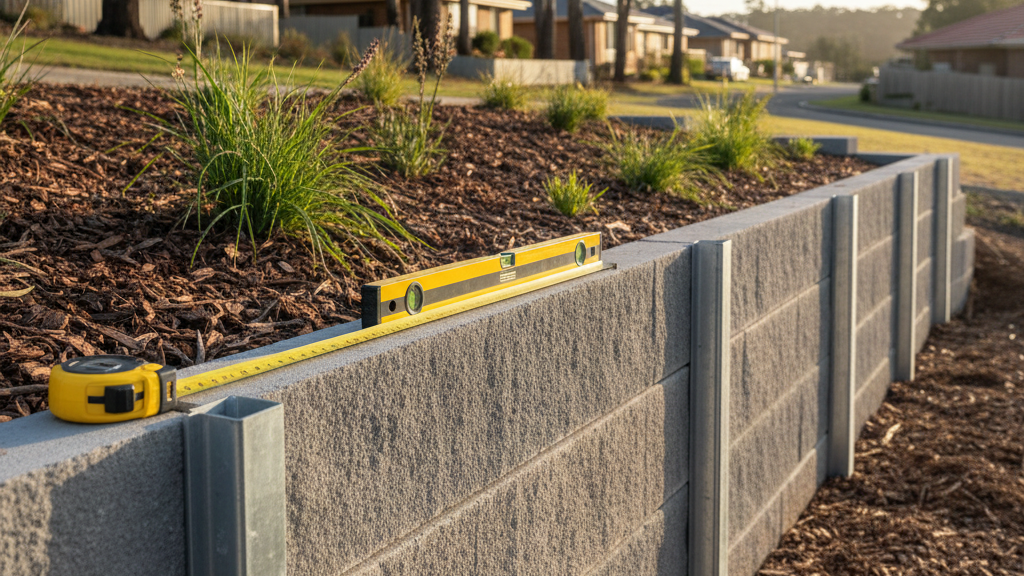
Concrete sleeper walls are the most popular choice across Canberra — and for good reason. They’re strong, low-maintenance, and available in a range of finishes that mimic natural stone or timber without the decay risk.
- Standard concrete sleepers: $400–$650 per lineal metre (installed)
- Textured or decorative sleepers: $500–$750 per lineal metre (installed)
- Typical lifespan: 40–60+ years
Concrete sleeper walls handle heights up to 1.5 metres comfortably with galvanised steel H-posts and proper drainage. For walls above this, engineered designs and deeper footings are required.
Natural Stone and Block Retaining Walls
For a premium finish, natural stone or sandstone block walls deliver a striking aesthetic — particularly in established Canberra suburbs like Red Hill, Deakin, and Yarralumla where property presentation matters.
- Besser block (rendered): $500–$750 per lineal metre (installed)
- Natural sandstone: $650–$900+ per lineal metre (installed)
- Boulder walls (dry stack): $350–$600 per lineal metre (installed)
Stone walls require skilled labour and often involve heavier machinery for placement, which is reflected in the price. However, they add significant property value and require virtually no maintenance.
Factors That Affect Your Retaining Wall Quote
Two retaining walls on neighbouring properties can vary in cost by thousands of dollars. Understanding why helps you assess whether a quote is fair — or padded. For a tailored figure, a custom landscaping design and quote takes each of these variables into account.
Wall Height and Length
This is the single biggest cost driver. A wall at 400mm needs minimal engineering and basic footings. A wall at 1.2 metres needs deeper posts, drainage provisions, and potentially an engineer’s design. Every additional 200mm of height adds structural complexity.
Slope and Site Access
Canberra’s terrain varies dramatically — from flat blocks in Amaroo to steep slopes in Isaacs and O’Malley. Steeper sites require:
- More extensive excavation and soil removal
- Tiered or stepped wall designs
- Heavier retaining solutions to manage lateral earth pressure
- Potential crane or bobcat access considerations
If machinery can’t access the site easily, manual labour costs increase significantly — sometimes adding 20–40% to the overall price. Where access is tight, bobcat and mini digger hire can shift the labour equation back in your favour.
Soil Type and Conditions
Canberra’s soil profile includes reactive clay in many suburbs, particularly across Tuggeranong and parts of Weston Creek. Reactive clay soils expand and contract with moisture changes, placing additional stress on retaining structures. This often demands:
- Deeper footings and larger steel posts
- Enhanced drainage behind the wall (agricultural pipe and gravel backfill)
- Geotechnical assessment in some cases
Drainage Requirements
Every retaining wall needs drainage — but the extent varies. A basic ag-pipe and gravel drainage system is included in most quotes. However, if your site has a high water table or poor natural drainage, additional stormwater management may be required, adding $30–$80 per lineal metre. In heavy clay pockets across Belconnen, dedicated drainage excavation is often the smarter long-term spend.
Roughly 60% of retaining wall failures in Canberra can be traced back to inadequate drainage — not structural deficiency. Getting the waterproofing and ag-pipe right from day one saves thousands in remediation later.
Council Approval and Engineering in the ACT
When Do You Need Approval?
In the ACT, retaining walls are regulated under the Planning and Development Act. The general rules for 2026 are:
- Walls under 800mm — generally exempt from development approval, provided they don’t affect neighbours or public land.
- Walls between 800mm and 1.5 metres — typically require an engineer’s design and may need an exemption declaration.
- Walls over 1.5 metres — almost always require a full development application (DA) and structural engineering certification.
- Walls near boundaries — even low walls within 1.5 metres of a boundary may trigger neighbour notification requirements.
For the latest ACT requirements, homeowners should confirm current rules with the ACT Government planning authority before starting work.
What Does Engineering Cost?
A structural engineer’s design for a standard residential retaining wall generally sits in the range of $600 to $1,500, depending on complexity. Development application fees add further cost and can extend project timelines by several weeks, so factor approvals into your planning from day one.
How Site Preparation Affects the Final Price
Before the first sleeper goes in the ground, the site itself has to be ready — and this stage can quietly swing your total spend. Grading, excavation, and spoil removal are often lumped into a single line on a quote, but each carries its own cost driver.
- Excavation depth and volume of soil to be removed
- Rock or tree-root obstructions that slow machinery
- Distance from the truck loading point to the wall line
- Availability of on-site storage for materials
Professional earth moving services and proper bobcat grading before construction reduce the risk of settlement and drainage failure later. Skimping here almost always costs more at the remediation stage.
How to Compare Retaining Wall Quotes Fairly
A cheap quote isn’t always the best value — and an expensive one isn’t automatically better. When comparing your options, look beyond the headline number:
- Materials specified — is the sleeper grade, post size and concrete strength listed clearly?
- Drainage inclusions — is ag-pipe, geo-fabric and gravel backfill in the price?
- Excavation and spoil removal — included, or an extra line?
- Engineering and approval — quoted separately, or bundled?
- Warranty and workmanship — what’s actually covered, and for how long?
A transparent quote lets you compare apples with apples. If a number looks unusually low, chances are something has been left out.
Budgeting Tips for Canberra Homeowners
Keeping retaining wall costs under control comes down to planning early and asking the right questions. A few practical moves:
- Get the site inspected before locking in a budget — a walk-over often uncovers drainage or access issues that shift the number.
- Match the material to the job — a $900/m stone wall on a low garden bed rarely stacks up commercially.
- Group works where possible — combining retaining with turf, paving or general landscaping usually reduces mobilisation costs.
- Don’t cut drainage — it’s the single most common failure point in Canberra walls.
For larger blocks, staging works across a season can smooth out cash flow without compromising structural integrity.
Frequently Asked Questions
How much does a retaining wall cost per metre in Canberra?
In 2026, retaining wall cost in Canberra generally ranges from $250 to $900+ per lineal metre installed. Timber sleepers sit at the lower end, concrete sleepers in the mid range, and natural stone or sandstone at the top end.
Do I need council approval for a retaining wall in the ACT?
Walls under 800mm are generally exempt from development approval in the ACT, provided they don’t affect neighbours or public land. Walls between 800mm and 1.5 metres typically need an engineer’s design, and walls over 1.5 metres usually require a full development application.
Which retaining wall material lasts the longest?
Concrete sleeper walls typically last 40–60+ years, natural stone can last even longer with minimal maintenance, and timber sleepers generally last 15–25 years depending on timber grade and drainage. Material choice should balance lifespan, appearance and budget.
Why do drainage issues cause retaining walls to fail?
When water builds up behind a wall, it adds significant lateral pressure on the structure. Without proper ag-pipe and gravel backfill, this pressure can crack, tilt or blow out the wall. Getting drainage right at construction is far cheaper than remediating a failed wall.
Can I combine my retaining wall with other landscaping works?
Yes — bundling a retaining wall with turf, paving, decking or wider landscaping usually reduces overall cost per project, because mobilisation, excavation and site clean-up are shared across the scope. It also delivers a more cohesive finished result.