If you’re planning new landscaping or trying to fix an uneven backyard in Calwell, backyard excavation is usually the first practical step before any garden bed, retaining wall or lawn goes in. It involves removing or reshaping soil to correct drainage, levels and access before landscaping equipment or plants can go anywhere near the site. This guide walks through what typically happens on site, what equipment gets used, and what to check before work starts, so you know what you’re arranging rather than guessing at it.
Key Takeaways
- Backyard excavation corrects uneven ground, poor drainage and unstable soil before landscaping begins.
- Site access and block size in Calwell often determine whether a mini digger or full-size machinery is used.
- Grading and resloping work is usually paired with excavation to direct water away from the house.
- Underground services should be checked before any digging starts.
- Excavated material needs a plan for reuse, spreading or removal from site.
Why Backyards in Calwell Often Need Excavation First
Established Tuggeranong blocks, including many in Calwell, can carry decades of settled soil, old garden beds, tree root systems and uneven grading left over from the original build. Over time, this creates low spots that pool water near fences or foundations, and high spots that make lawns and paved areas awkward to use. Before a new garden design, turf installation or retaining wall can go in, the ground underneath it has to be correct — level where it needs to be level, and sloped where it needs to shed water.
This is where excavation and grading work together. Excavation removes or relocates soil and any unwanted material, while grading and resloping adjust the finished surface so water moves in the right direction. Skipping this step is one of the most common reasons a new backyard landscape looks good for a season and then develops soggy patches, cracking pavers or a retaining wall under pressure.
What a Backyard Excavation Project Typically Involves
A residential excavation in Calwell generally follows a similar sequence, whether the goal is a full backyard renovation or a smaller correction ahead of new planting.
- Site assessment: checking existing levels, soil condition, drainage points and access before any machinery arrives.
- Marking and protection: identifying areas to be excavated and protecting existing structures, fences or plants that are staying.
- Digging and material handling: removing soil to the required depth and either stockpiling it on site for reuse or arranging removal.
- Grading and resloping: shaping the finished surface to the levels and falls the landscape design needs, particularly around the house and any paved areas.
- Preparation for the next stage: leaving a compacted, correctly levelled base ready for turf, garden beds, paving or a retaining wall.
Our team at ACT House & Landscaping Maintenance treats grading and resloping as part of the same job as the dig itself — moving soil without correcting the fall underneath it just relocates the drainage problem rather than solving it. If drainage is a known issue on your block, our drainage excavation services page covers how excavation and drainage work are typically scoped together.
A backyard that looks level to the eye can still be sending water exactly where you don’t want it — that’s what the excavation and grading stage is there to fix.
If you’re not sure yet whether your project needs excavation, grading, or both, it helps to talk it through before committing to a scope.
Equipment Hire for Backyard Excavation Jobs
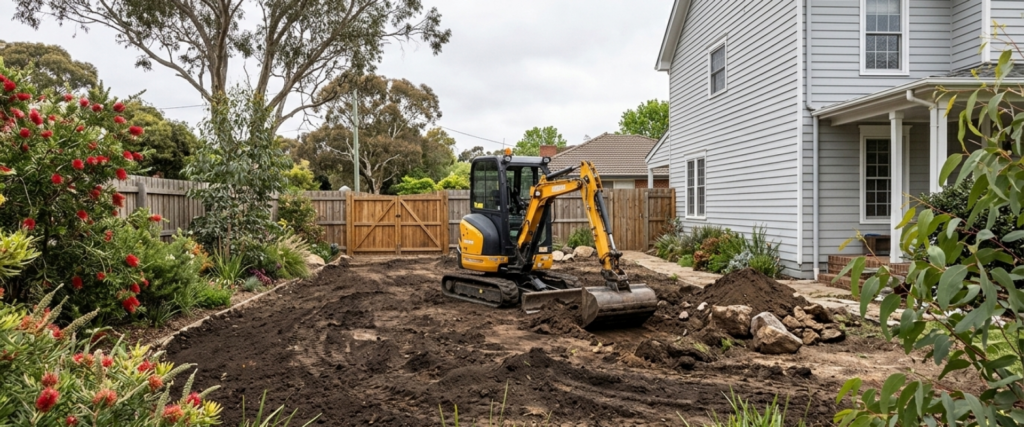
Equipment choice usually comes down to how much space there is to work in. Many Calwell backyards are accessed through a side gate or a narrow strip beside the house, which rules out larger machinery straight away. A mini digger is the more common choice for residential backyard work because it can get through standard gate openings and manoeuvre in tighter garden spaces, while still handling the volume of soil a typical backyard project needs to move.
Larger jobs — a bigger block, a driveway tie-in, or a site with good rear or side access — may call for a full-size excavator or bobcat instead. Either way, matching the machine to the access and the scope of the dig avoids unnecessary damage to lawns, paths or fencing that aren’t part of the project. Our bobcat and mini digger hire page has more detail on which equipment suits different site conditions around Canberra.
Site Preparation and Access Considerations in Calwell
Before booking any excavation work, it’s worth walking your own backyard with a few practical questions in mind: how wide is the access point, is there a slope machinery would need to negotiate, and are there established trees, retaining structures or underground services nearby that need to be worked around. Underground services — water, gas, electrical or communications lines — should always be checked and marked before digging starts, since older Tuggeranong properties don’t always have services running exactly where a plan might suggest.
It’s also worth thinking about where excavated soil will go. Some of it can often be reused on site for regrading or building up garden beds elsewhere in the yard, which reduces the amount that needs to be removed. What can’t be reused needs a clear plan for removal, rather than being left in a pile at the end of the job. If you’re weighing up removal and clean-up alongside the excavation itself, our gardening services page covers how leftover material and garden waste are typically handled.
Grading, Drainage and What Comes After the Dig
Getting the excavation right is only half the job — the finished grade determines how the backyard performs afterwards. A correctly graded yard directs surface water away from the house and toward drainage points rather than letting it collect against foundations, paths or retaining walls. This is particularly relevant on blocks with a rear fall toward the house, or where an existing retaining wall is already showing signs of water pressure.
Once the levels and falls are set, the site is usually left compacted and ready for the next stage of the landscape plan, whether that’s turf, garden beds, paving preparation or a retaining wall. If a retaining wall is part of your plan, our retaining wall guide explains what typically drives pricing once the site prep is done.
Frequently Asked Questions
How do I know if my backyard needs excavation before landscaping?
Signs include water pooling after rain, uneven ground that makes mowing or paving difficult, or a slope that directs water toward the house rather than away from it. A site assessment can confirm whether excavation and grading are needed before the rest of the landscape plan goes ahead.
What size equipment is used for a typical Calwell backyard excavation?
Most residential backyards are worked with a mini digger, since it can access narrow side gates and tighter spaces without damaging existing lawns or paths. Larger blocks with better access may suit a bigger excavator or bobcat, depending on the volume of soil involved.
Can excavated soil be reused on site?
Often, yes — soil removed during excavation can sometimes be reused elsewhere in the yard for regrading or building up garden beds, which reduces how much needs to be taken off site. What can’t be reused should be included in the removal plan from the start.
Do I need to check for underground services before excavation?
Yes. Underground water, gas, electrical or communications lines should be checked and marked before any digging begins, particularly on established properties where service locations may not match older plans.
Is grading always needed after excavation?
In most backyard projects, yes. Excavation removes or relocates soil, but grading sets the final fall of the ground so water moves away from the house and toward proper drainage points rather than collecting on site.
Getting Your Calwell Backyard Ready to Landscape
Backyard excavation isn’t a separate project from your landscaping plan — it’s the groundwork that determines whether the finished result actually holds up. Getting the levels, drainage and access right before turf, garden beds or a retaining wall go in saves having to correct problems later, once everything else is already in place.
Every Calwell block is a little different, from access through the side gate to how the yard slopes toward or away from the house, which is why a site walk-through before work starts is worth the time. It’s the easiest way to match the right equipment and approach to your particular yard.
If you’re planning a backyard project in Calwell and want to talk through what excavation and grading it might need, contact ACT House & Landscaping Maintenance on 0406 700 400 or [email protected].