Belconnen, a vibrant district in Canberra’s north, is well-known for its established suburbs and growing new estates. However, many homeowners and property managers in areas like Kaleen, Bruce, and the newer developments of Macnamara face a common challenge: clay soil and its impact on drainage. Effective landscaping is crucial for managing this, ensuring your garden thrives and your property remains protected from waterlogging. Understanding the characteristics of Belconnen’s clay soil and implementing appropriate drainage solutions is key to maintaining a healthy and functional outdoor space.
Key Takeaways
- Belconnen’s clay soil presents unique drainage challenges due to its dense composition.
- Signs of poor drainage include waterlogging, stunted plant growth, and a muddy lawn.
- DIY solutions like soil amendment and raised garden beds can improve clay soil.
- Professional solutions such as French drains, subsurface drainage, and earthmoving services are effective for severe issues.
- Proper drainage protects property value and ensures long-term garden health.
Understanding Belconnen’s Clay Soil Drainage Belconnen
Clay soil is prevalent throughout the ACT, including many parts of Belconnen. In our experience, its fine particles pack tightly together, leaving little room for water and air to circulate. Unlike sandy or loamy soils, clay has a platelet-like particle structure that causes it to swell when wet and shrink when dry, creating a near-impermeable barrier that traps water at the surface. This leads to several problems for gardens and properties:
- Poor Drainage: Water struggles to penetrate clay soil, resulting in surface water runoff or prolonged pooling after rain. This can lead to waterlogging, suffocating plant roots and making areas unusable.
- Soil Compaction: When wet, clay soil becomes dense and heavy. As it dries, it hardens, making it difficult for roots to grow and for essential nutrients to reach plants.
- Nutrient Imbalance: While clay soil can be rich in nutrients, poor drainage can lead to anaerobic conditions, which hinder nutrient uptake by plants.
- Structural Damage: Persistent waterlogging around foundations can compromise structural integrity over time, leading to costly repairs.
Identifying these challenges early is crucial for effective clay soil drainage Belconnen management.
Why Belconnen Faces Particular Drainage Difficulties
While clay soil is common across the ACT, Belconnen residents often face a combination of local factors that can intensify drainage problems:
- Red and Yellow Clay Subsoils: Much of Belconnen sits on heavy red and yellow clay subsoils that are especially slow-draining. In established suburbs like Kaleen, Florey, and Macgregor, decades of foot traffic and lawn maintenance have compacted these soils further, reducing infiltration rates to as little as 1–5 mm per hour.
- New Development Disturbance: In newer estates like Macnamara, Whitlam, and Strathnairn, construction machinery heavily compacts the natural clay profile. Builders often strip the organic topsoil layer during site preparation, leaving homeowners with raw, exposed clay that sheds water almost entirely.
- Canberra’s Extreme Climate Swings: Belconnen experiences hot, dry summers and cold winters that regularly dip below freezing. This cycle causes clay to crack deeply in summer, then swell and seal shut when autumn rains arrive — meaning heavy downpours hit soil that is already saturated or sealed at the surface.
- Ginninderra Creek Catchment: Much of Belconnen drains into the Ginninderra Creek system. Properties on lower-lying land near the creek corridor or around Lake Ginninderra can receive runoff from surrounding slopes, compounding waterlogging on already clay-heavy blocks.
- Varied Topography: Belconnen’s landscape ranges from relatively flat areas in Giralang and McKellar to steeper slopes in parts of Bruce and Cook. Sloped blocks shed water onto downhill neighbours, while flat blocks have no natural gradient to move water away from structures.
These local conditions mean that a drainage solution that works well in a sandy-soil suburb may be completely inadequate for a Belconnen property. Any effective plan needs to account for the specific soil profile, slope, and catchment position of your block.
Signs of Poor Drainage and Waterlogging
It’s important to recognise the indicators of inadequate drainage on your Belconnen property. Catching these signs early can prevent more significant problems down the line:
- Standing Water: After rainfall, puddles remain on your lawn or garden beds for extended periods.
- Muddy or Spongy Areas: Certain spots in your yard consistently feel soft and muddy, even days after rain.
- Stunted Plant Growth: Plants appear unhealthy, yellowing, or failing to thrive, despite adequate watering and fertilisation. This is often due to root rot from lack of oxygen.
- Moss or Algae Growth: The presence of moss or algae on the soil surface is a clear sign of persistent moisture and poor airflow.
- Basement or Crawl Space Moisture: Water problems outside can often lead to dampness or leaks in lower parts of your home.
If you observe any of these issues, it’s time to consider drainage improvement solutions for your property.
Effective drainage isn’t just about moving water; it’s about creating a balanced environment where your garden can flourish and your property remains protected.
DIY Solutions for Improving Clay Soil Drainage
For minor drainage issues or as a proactive measure, several DIY methods can significantly improve clay soil in your Belconnen garden:
- Soil Amendment: Incorporating organic matter such as compost, well-rotted manure, or gypsum can dramatically improve clay soil structure. This loosens the soil, creating larger pore spaces for water and air. Aim for a generous layer (10-15 cm) mixed into the top 20-30 cm of soil.
- Raised Garden Beds: Building raised beds is an excellent way to bypass problematic clay soil entirely. Fill them with a high-quality, well-draining soil mix that provides an optimal growing environment for your plants. This is particularly effective for vegetable gardens or ornamental displays.
- Aeration: Regularly aerating your lawn, especially in areas prone to compaction, can help water penetrate deeper into the soil. Manual or mechanical aerators create small holes, improving air and water movement.
- Strategic Planting: Choose plants that are known to tolerate or even thrive in clay soil conditions. Native ACT species such as Kangaroo Grass (Themeda triandra), Lomandra, and native Geraniums are well-adapted to heavy clay and their deep root systems gradually break up compacted layers over time.
Dealing with Complex Drainage Issues?
Our experts can assess your Belconnen property and recommend the most effective drainage solutions tailored to your needs.
Improving Clay Soil for the Long Term
One-off amendments help, but genuinely transforming Belconnen’s heavy clay into productive garden soil often requires an ongoing approach over several years:
- Annual Organic Top-Dressing: Each autumn, spread 5–8 cm of quality compost or aged manure across garden beds and rake it into the surface. Over successive seasons, earthworms and soil microbes incorporate this organic matter deeper, steadily improving soil structure and drainage capacity.
- Permanent Mulch Cover: Maintain a 7–10 cm layer of coarse organic mulch (such as eucalyptus bark or woodchip) year-round. Mulch regulates soil moisture, reduces the extreme wet-dry cracking cycle that recompacts clay, and feeds beneficial soil biology as it decomposes.
- Cover Cropping in Bare Beds: Sow a green manure crop like clover or field peas in unused beds over winter. Their root networks physically loosen clay, and when slashed and turned in before spring planting, they add a fresh pulse of organic matter.
- Avoid Working Wet Clay: Digging or walking on clay soil when it is saturated destroys its structure and undoes months of improvement. Wait until it is moist but crumbly before cultivating, and use stepping stones or defined paths to minimise compaction in garden beds.
While these methods can be effective, severe or widespread drainage problems often require professional intervention.
Professional Drainage Solutions for Belconnen Properties
When DIY methods aren’t enough, professional drainage excavation services offer robust and long-lasting solutions for Belconnen properties:
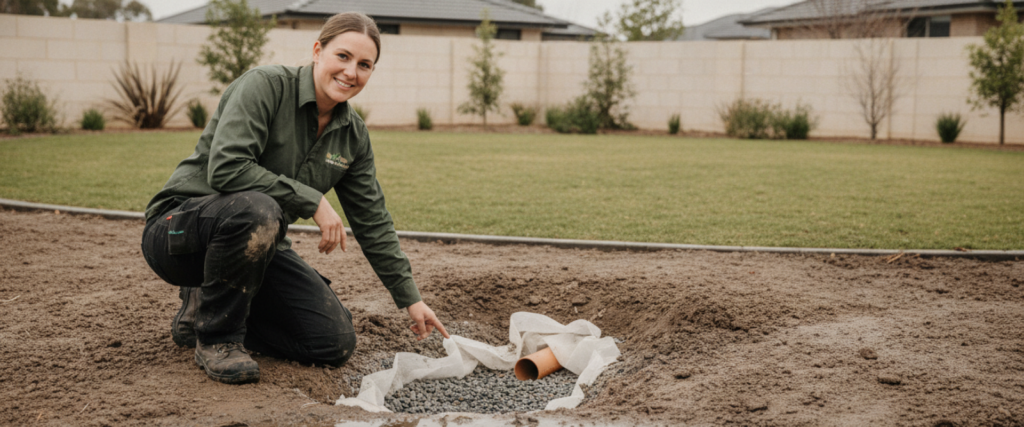
- French Drains: A French drain is a trench filled with aggregate (gravel or crushed rock) and a perforated pipe, designed to redirect surface water and subsurface drainage away from problem areas. The trench is lined with geotextile fabric to prevent soil from clogging the system.
- Subsurface Drainage Systems: These systems involve a network of perforated pipes buried beneath the ground to collect excess water and channel it to a suitable outlet, such as a storm drain or a designated absorption area. This is ideal for large lawns or extensive garden beds.
- Surface Drainage Solutions: Techniques like grading and swales can effectively manage surface drainage. Grading involves reshaping the land to create gentle slopes that direct water away from structures. Swales are shallow, wide, and vegetated channels that slow and collect runoff. Our Bobcat grading services in Belconnen are instrumental in achieving correct slopes for effective surface water management.
- Earthmoving Services: For significant regrading or extensive drainage system installation, earthmoving services using machinery like excavators and bobcats are essential. This allows for efficient excavation, soil redistribution, and compaction to create stable and well-drained landscapes.
Choosing the Right Solution for Your Property
Selecting the most appropriate clay soil drainage Belconnen solution depends on several factors:
- Severity of the Problem: Minor waterlogging might respond to DIY soil amendments, while persistent pooling or structural concerns demand professional systems.
- Property Layout and Topography: The natural slope of your land, existing structures, and garden design will influence the feasibility and effectiveness of different solutions.
- Budget: DIY options are generally more cost-effective, but professional systems offer long-term reliability and peace of mind, potentially saving money on future repairs.
- Long-Term Goals: Are you looking for a quick fix or a comprehensive solution that enhances your garden’s health and property value for years to come?
A professional assessment by ACT House & Landscaping Maintenance can help you weigh these factors and choose the best path forward for your Belconnen property.
Benefits of Effective Drainage for Garden Health and Property Value
Investing in proper drainage for your Belconnen property yields significant returns, both for your garden and your home:
- Healthier Gardens: Plants thrive in well-drained soil that allows for proper root respiration and nutrient absorption. Effective drainage prevents root rot and encourages vigorous growth, contributing to overall home gardening services.
- Increased Usability: Say goodbye to muddy, unusable areas. Well-drained spaces can be enjoyed year-round for recreation, entertaining, or simply relaxing.
- Property Protection: By directing water away from foundations, driveways, and patios, drainage solutions prevent erosion, cracking, and structural damage, safeguarding your investment.
- Enhanced Property Value: A beautifully landscaped property with excellent drainage is highly attractive to potential buyers, adding significant kerb appeal and value.
- Reduced Maintenance: Healthy plants and stable soil reduce the need for constant intervention, making your garden easier to care for in the long run.
When to Call ACT House & Landscaping Maintenance
While some drainage issues can be tackled by homeowners, certain situations warrant calling in the experts at ACT House & Landscaping Maintenance:
- Persistent Waterlogging: If standing water remains for more than 24-48 hours after rain, professional intervention is likely needed.
- Foundation Concerns: Any signs of cracking, dampness, or leaks in your home’s foundation or basement indicate a serious drainage problem that requires immediate attention.
- Extensive Earthmoving: Projects requiring significant excavation, grading, or reshaping of your landscape are best handled by experienced professionals with the right equipment.
- Complex Solutions: Installing French drains, subsurface drainage, or intricate surface grading requires specific knowledge and precision to be effective.
- Time and Expertise Constraints: If you lack the time, tools, or expertise to implement effective solutions, trusting professionals ensures the job is done right the first time.
ACT House & Landscaping Maintenance offers comprehensive landscaping services in Canberra, with local expertise in Belconnen’s unique soil conditions.
Frequently Asked Questions
What are the primary characteristics of clay soil?
Clay soil is characterised by very fine particles that pack tightly together, limiting pore space for water and air. This leads to slow drainage, a heavy texture when wet, and a tendency to harden and compact when dry.
How does clay soil affect plant health?
Poor drainage in clay soil can lead to waterlogged conditions that suffocate plant roots due to lack of oxygen. This can cause root rot, stunted growth, yellowing leaves, and overall plant decline, even with adequate watering.
Can I improve clay soil drainage myself?
Yes, for minor issues, you can improve clay soil by incorporating large amounts of organic matter like compost or gypsum, creating raised garden beds, and aerating your lawn. These methods help break up the dense soil structure.
What is a French drain and when is it needed?
A French drain is a trench containing a perforated pipe surrounded by gravel, often wrapped in geotextile fabric. It’s needed to collect and redirect surface and subsurface water away from areas prone to waterlogging, such as near foundations or in consistently wet garden beds.
How can professional earthmoving help with drainage?
Professional earthmoving services use specialised machinery like excavators and bobcats to efficiently reshape land (grading), dig trenches for drainage systems, and prepare sites for new landscaping. This is crucial for creating proper slopes and installing complex drainage solutions that effectively manage water flow.
Does improving drainage increase property value?
Absolutely. Effective drainage prevents water damage to foundations, enhances garden health and usability, and improves the overall kerb appeal of your property. These factors make your home more attractive to potential buyers and can significantly increase its market value.
Conclusion
Managing clay soil drainage Belconnen is a crucial aspect of property maintenance and landscaping in the district. From identifying early signs of waterlogging to implementing advanced subsurface drainage and surface drainage solutions, addressing these challenges ensures a healthier garden and a more protected home. Whether you opt for DIY soil amendments or require comprehensive earthmoving services and French drain installation, ACT House & Landscaping Maintenance offers the local expertise and solutions you need. Don’t let poor drainage compromise your outdoor space; take proactive steps to create a resilient and beautiful landscape.
Related resources
Visit ACT House & Landscaping Maintenance Today
Ready to improve your Belconnen property’s drainage and ensure your garden thrives? Our team provides tailored solutions for clay soil and water management.