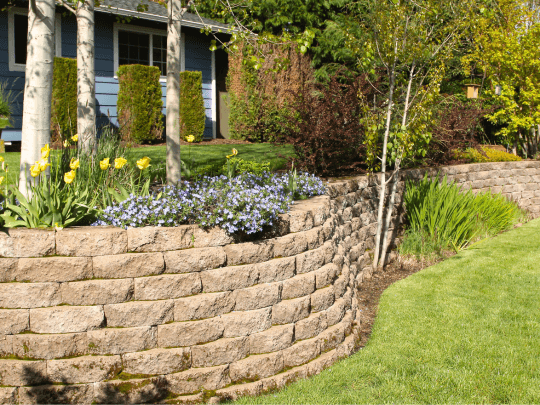
Retaining wall blocks have the special role of beautifying the looks of the outdoor regions. It is quite important to maintain the longevity of retaining wall blocks for their best function & appearance. These blocks are suitable for building a terraced garden, preventing soil erosion, or adding structure to your yard. Come, let’s share some of the key maintenance tips for retaining wall blocks for a long duration:
For bacteria-free blocks, clean them regularly. A clean retaining wall looks good and is less affected by moisture, cracks, and erosion.
Temperature, soil movement, and natural settling may break even the strongest retaining wall blocks. Repairing cracks before they worsen requires regular investigation.
Drainage problems are one of the main reasons why retaining wall blocks get damaged. Placing water behind the wall can raise the pressure, which can eventually make the wall bow or fall.
Plants can beautify your retaining wall bricks, but unchecked growth might damage them. Pressure from tree roots and strong plants may remove and break blocks. Maintaining vegetation control assists in maintaining the wall’s strength and stability.
Depending on soil movement or atmospheric pressure, retaining wall blocks may shift. They may be rapidly repositioned to prevent further damage and maintain wall uniformity.
Behind the retaining wall, soil erosion may cause block movement and structural instability. The retaining wall blocks remain securely supported when the soil is managed properly. By keeping the soil structure intact, these problems can be avoided.
Retaining wall blocks perform best to secure & enhance the looks of the outdoor regions. For the attractive looks, these blocks need frequent maintenance. These maintenance include all the detections from natural hindrance that can affect these blocks badly. It includes crack detection, vegetation growth & bacterial growth. A proactive maintenance plan keeps your retaining wall blocks working attractively for seasons. This activity can be economical for you.
Spotted a crack, bulge or drainage problem? Our team inspects and repairs damaged retaining walls across Canberra. See our retaining wall repair and maintenance service or contact us to book an inspection.
We use cookies to understand how this site is used and to improve it. Privacy policy